



Feature Article
- Home
- Feature Article
- Data That Can Never Be Measured from the Ground — Passed Down to the Future: The “Miraculous Value” That Summit Observations Bring to Earth Science
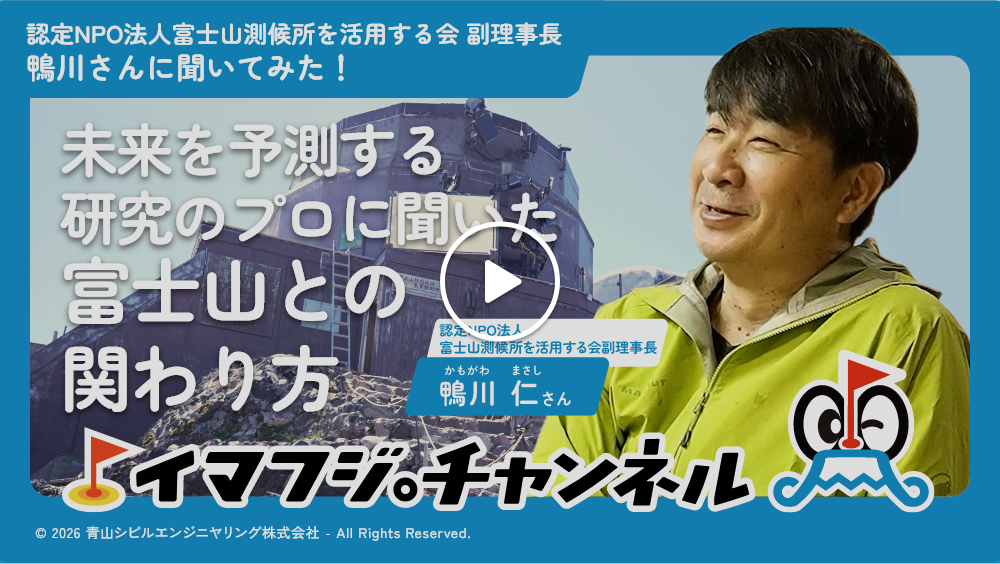
Data That Can Never Be Measured from the Ground — Passed Down to the Future:
The "Miraculous Value" That Summit Observations Bring to Earth Science
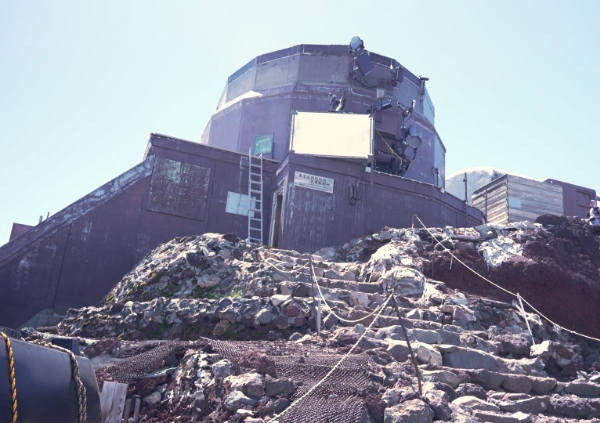
At the summit of Japan's highest peak, Mt. Fuji (elevation 3,776 m), stands the Mt. Fuji Special Regional Meteorological Observatory. At this extreme location, strictly off-limits to the general public, the Certified NPO Fujisan Weather Station Utilization Society marks its 20th anniversary of full-scale summer observations in 2026.
We sat down with Professor Masashi Kamogawa of the University of Shizuoka — Vice President of the Society and an earth physicist active on the global stage — for an in-depth interview! We covered everything from the reality of lightning research at the summit, to the challenge of running a research organization independently without government funding, and the historical significance of the Mt. Fuji real-time weather data service "Imafuji."
Let's dive together into the little-known science world above the clouds!
- Point 1 What Drives a Physicist to Keep Researching at the Harsh Summit of Mt. Fuji
-
Point 2
Charge Into the Thundercloud!
Lightning at Your Feet and Mt. Fuji as "The Earth's Giant Sensor" -
Point 3
Impossible to Measure from the Ground!
Why Must Observations Be Taken at the Summit of Mt. Fuji? - Column Expert Column: The Wisdom and Gear That Support Harsh Summit Research
- More Related Links & Video Introductions
POINT 01
What Drives a Physicist to Keep Researching
at the Harsh Summit of Mt. Fuji
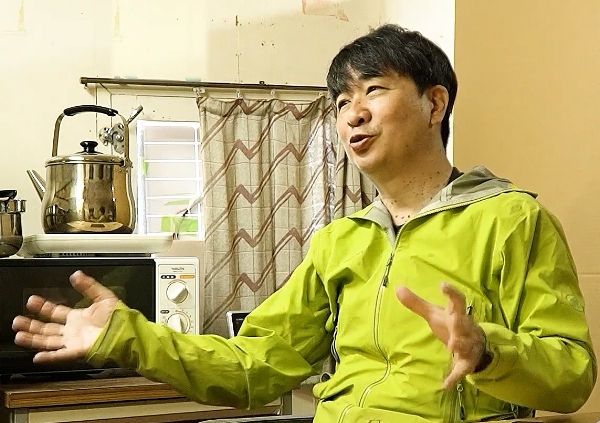
"Actually, Mt. Fuji was the first proper mountain I ever climbed. I've never even hiked another peak — I really am a researcher dedicated entirely to Mt. Fuji," says Professor Kamogawa with a smile.
At high altitudes like the summit of Mt. Fuji (3,776 m), thin air causes many people to suffer from altitude sickness. But Professor Kamogawa reflects, "Fortunately, my body handles high altitudes just fine — I guess it's a gift from God (laughs)." It's precisely this high-altitude tolerance that has allowed him to continue his research in such harsh conditions for nearly 20 years.
Originally specializing as a physicist in the predictive sciences like Newtonian mechanics — Professor Kamogawa is driven by the belief that "natural disasters should also be predictable through physics." Regardless of category, he continues to pursue the clarity of mechanisms and prediction of lightning, earthquakes, tsunamis, volcanic eruptions, and more.
POINT 02
Charge Into the Thundercloud!
Lightning at Your Feet and Mt. Fuji as "The Earth's Giant Sensor"
Professor Kamogawa's full-fledged entry into summit research came in 2008, when he was asked to measure the static electricity generated by thunderclouds.
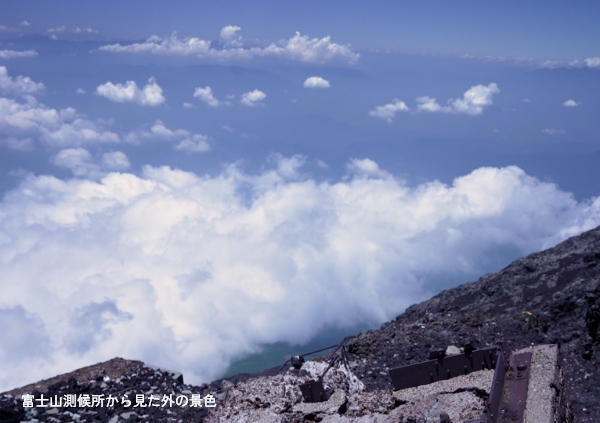
The summit of Mt. Fuji is one of the few extreme locations in the world where one can directly enter the base of an approaching thundercloud. As measurements continued in a place where hair stands on end when thunder approaches, his passion grew — and today the site has grown into a globally leading hub for mountain lightning research.
Moreover, Mt. Fuji — standing more than 1,000 meters higher than famous mountain observatories in Switzerland — attracts researchers from around the world as "the Earth's giant sensor," capable of detecting transboundary air pollution from the continent, cosmic rays, and even precursors to earthquakes and volcanic activity.
Related Article: "Mt. Fuji Trivia: The Dangers of Lightning on Mt. Fuji"
Related Article: "Imafuji Thunder Alert (Test Phase): Electric Field Intensity Graph"
POINT 03
Impossible to Measure from the Ground!
Why Must Observations Be Taken at the Summit of Mt. Fuji?
"Why is it that only the summit of Mt. Fuji will do — not another mountain or a ground-level laboratory?" The answer lies in the fact that Mt. Fuji is a "solitary peak" (a mountain with no obstructions around it) soaring to an elevation of 3,776 m.
The air at ground level is heavily influenced by friction with the earth's surface — but at approximately 3,800 m, the summit of Mt. Fuji sits precisely within the high-altitude layer known as the "free atmosphere," liberated from surface friction. Here, transboundary air pollutants such as PM2.5, yellow dust, and microplastics — carried on the wind across national borders from the continent — arrive unfiltered. There is no other location in Japan where raw air, before it descends to the ground, can be directly captured to measure global-scale atmospheric circulation.
Furthermore, the summit holds uniquely miraculous value for earth science as a place where sensors can directly observe the interior of thunderclouds — where drones or aircraft cannot safely remain due to violent winds — and as a fixed ground station for cross-referencing satellite data. The greatest significance of the Certified NPO Fujisan Weather Station Utilization Society's continued observations at the Mt. Fuji Special Regional Meteorological Observatory lies precisely in the ongoing accumulation of this data — data that can only ever be collected at the summit of Mt. Fuji — for the benefit of the Earth.
ColumnExpert Column: The Wisdom and Gear That Support Harsh Summit Research
-
1 The "Multi-Function Gadget Kit" and "Strategic Trail Snacks" That Prevent Observation Trouble at the Summit
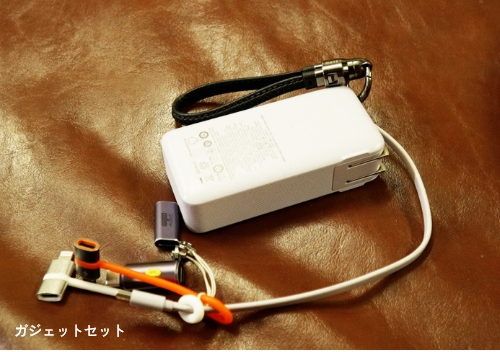
Tucked into Professor Kamogawa's backpack is a gadget set that bundles together extension cables and conversion connectors of various specifications, as well as tools for measuring the amperage (current) of equipment.
When conducting observations at the summit, unexpected things can happen beyond what you've prepared for, and researchers frequently encounter problems such as forgetting a necessary cable or finding that connector sizes don't match. Additionally, because thin air at the summit dulls cognitive function, keeping all parts connected as a single unit — rather than in separate pieces — prevents loss and allows immediate response to any equipment trouble. That's the key!
As for trail snacks, there's no particular obsession — but he makes a point of carrying commercially available snacks in individual packaging. Not only can they provide a quick energy boost, but if bad weather forces an unexpected overnight stay at the summit, none of them go to waste — a reassuring backup.
-
2 Listening to Classical Music Between Research Sessions at the Summit — Maintaining Focus and Refreshing the Mind
For safety reasons, "listening to music while moving on the mountain is absolutely prohibited" — but after arriving at the Mt. Fuji Special Regional Meteorological Observatory, Professor Kamogawa treasures time listening to his favorite music during breaks between research sessions and late-night administrative work.
His playlist features classical piano pieces by Bach, Chopin, and others. "Mt. Fuji suits chamber music — solos and quartets — more than a full orchestra," he says.
Background music that helps him relax, refresh his mind, and sharpen the focus needed to advance his research efficiently in the harsh summit environment is, for the professor, an indispensable companion.
MoreRelated Links & Data Utilization
Certified NPO Fujisan Weather Station Utilization Society — Official Website
[URL:https://npofuji3776.org/]
(For information on summer research activities and results at the Mt. Fuji Special Regional Meteorological Observatory!)
YouTube Short Videos & Summit Live Camera
Professor Kamogawa's interview videos are now available!
- [Shocking] The Summit of Mt. Fuji Is "Almost Outer Space"!? Extreme Research Above the Clouds
- [Behind the Pro] Check Out the "Trusty Companions" That Support Researchers at the Harsh Summit of Mt. Fuji
The Certified NPO Fujisan Weather Station Utilization Society channel streams live footage from around Mt. Fuji!
- [LIVE-NO.1] Mt. Fuji Summit Live Camera CC112 — East-Facing Camera (Sunrise Camera)
- [LIVE-NO.2] Mt. Fuji Summit Live Camera CC102 — East-Facing Solar Camera (nicknamed "Sea Turtle")
- [LIVE-NO.3] MORECA Mt. Fuji Live Camera (Tarobo) — Live-streaming from Tarobo at the foot of Mt. Fuji. Certified NPO: CC103
- [LIVE-NO.4] Mt. Fuji Summit Live Camera CC112 — West-Facing Camera
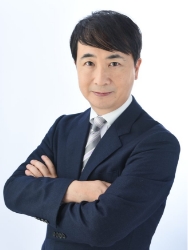
Masashi Kamogawa
- Vice President, Certified NPO Fujisan Weather Station Utilization Society
- Specially Appointed Professor, Global Regional Center, University of Shizuoka
- Ph.D. (Science) / Earth Physics, Natural Disaster Prediction
PROFILE
Specializes in earth physics, atmospheric electricity, and natural disaster prediction. Approaches the prediction and mechanism elucidation of lightning, earthquakes, tsunamis, and volcanic eruptions from a physicist's perspective. Has participated in summit observations on Mt. Fuji since 2008, and as Vice President of the Certified NPO Fujisan Weather Station Utilization Society has built a globally recognized hub for mountain lightning research at the Mt. Fuji Special Regional Meteorological Observatory. Also pursues intellectually curious research and social implementation across diverse fields through personal projects, including "the science of champagne" and satellite development.